


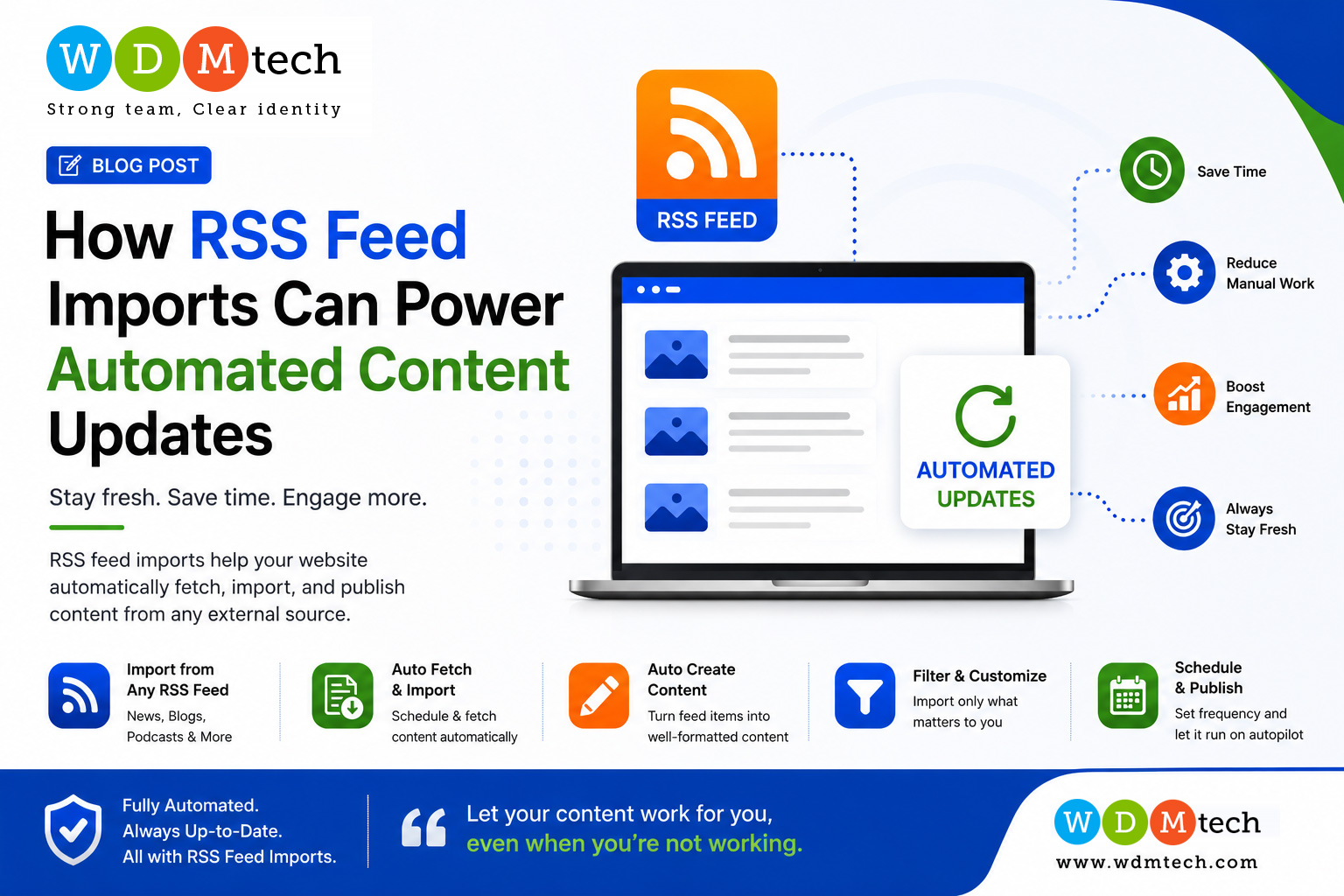
In today’s fast-moving digital world, keeping your website fresh and updated is essential. But manually publishing new articles, news, podcasts, or product updates every day can be time-consuming.
This is where RSS Feed Imports become a game changer.
RSS feed imports allow your website to automatically fetch content from external sources and publish it on your site according to rules you define. Whether you run a news portal, blog, e-commerce website, or community platform, RSS automation can save time and keep your audience engaged with fresh content.
What is an RSS Feed?
RSS (Really Simple Syndication) is a standard format that websites use to publish frequently updated content.
An RSS feed may contain:
- Blog posts
- News articles
- Podcasts
- Videos
- Product updates
- Job listings
- Press releases
Instead of manually visiting websites to check for updates, RSS allows you to receive the latest content automatically.
Why Automate Content Updates?
Managing content manually becomes difficult as your website grows.
Automated RSS imports help you:
- Save hours of manual work
- Keep your website regularly updated
- Aggregate content from multiple sources
- Increase visitor engagement
- Improve SEO through fresh content
- Publish content even when you’re away
Your website becomes an always-active platform that keeps itself updated.
How RSS Feed Imports Work
Step 1: Add RSS Feed URLs
Choose one or more RSS feeds from trusted websites.
Examples:
- Industry blogs
- News websites
- Podcasts
- Partner websites
- Company announcements
Step 2: Configure Import Rules
You decide:
- Which categories to import into
- How often to fetch updates
- Whether to publish automatically or save as drafts
- Which content fields to import
- How many items to keep
Step 3: Schedule Automatic Imports
The system periodically checks the RSS feed for new content.
If new articles are found:
- They are downloaded
- Images are fetched
- Metadata is processed
- Articles are published automatically
No manual intervention required.
Popular Use Cases
1. News Websites
News portals import stories from multiple trusted sources and publish them automatically.
This ensures:
- Faster publishing
- More content variety
- Continuous updates
2. Industry Blogs
Technology, finance, health, and business websites can aggregate articles from industry leaders and maintain an active blog.
3. Podcasts and Media Sites
Podcast episodes and video feeds can be imported automatically with titles, descriptions, thumbnails, and publication dates.
4. E-commerce Websites
Stores can import:
- Product announcements
- Supplier news
- Promotional campaigns
- Industry trends
This helps keep customers informed and engaged.
Benefits Beyond Automation
RSS feed imports are not just about saving time.
Improve SEO
Search engines prefer websites that publish fresh and relevant content regularly.
Frequent updates can:
- Increase crawl frequency
- Improve keyword coverage
- Enhance user engagement
- Reduce content gaps
Increase User Engagement
Visitors are more likely to return when they know your website is always updated.
Fresh content means:
- More page views
- Longer session durations
- Better user retention
Scale Content Operations
A small team can manage a large content portal with automation.
Instead of spending time copying and pasting articles, your team can focus on:
- Editing
- Analysis
- Marketing
- Creating original content
Automation handles the repetitive tasks.
Best Practices for RSS Feed Imports
Import from Trusted Sources
Choose reliable and high-quality websites.
Avoid:
- Spam feeds
- Duplicate content sources
- Unverified websites
Review Copyright Policies
Always ensure you have permission to republish or display imported content.
In some cases, importing excerpts with attribution may be more appropriate.
Filter and Organize Content
Use categories, tags, and filters to keep imported content organized.
This improves:
- User experience
- Search functionality
- Content discoverability
Monitor Import Logs
Even automated systems need occasional monitoring.
Logs help you:
- Detect failed imports
- Identify feed changes
- Troubleshoot formatting issues
- Verify publishing schedules
The Future of Content Automation
Content automation is becoming an essential part of modern websites.
RSS feeds combined with smart filters, AI summarization, and automated publishing workflows can transform the way websites operate.
Instead of spending time on repetitive publishing tasks, businesses can focus on what matters most:
- Building their audience
- Creating value
- Growing their brand
Final Thoughts
RSS Feed Imports are one of the simplest yet most powerful ways to automate content updates.
They help websites stay fresh, save time, improve SEO, and deliver a better experience to visitors.
Whether you manage a blog, news portal, podcast platform, or business website, RSS automation can keep your content flowing automatically.
Work smarter, publish faster, and let your content update itself.